

%402x.svg)
Why Invest in Indonesia? The Complete Case for Property Investors in 2026
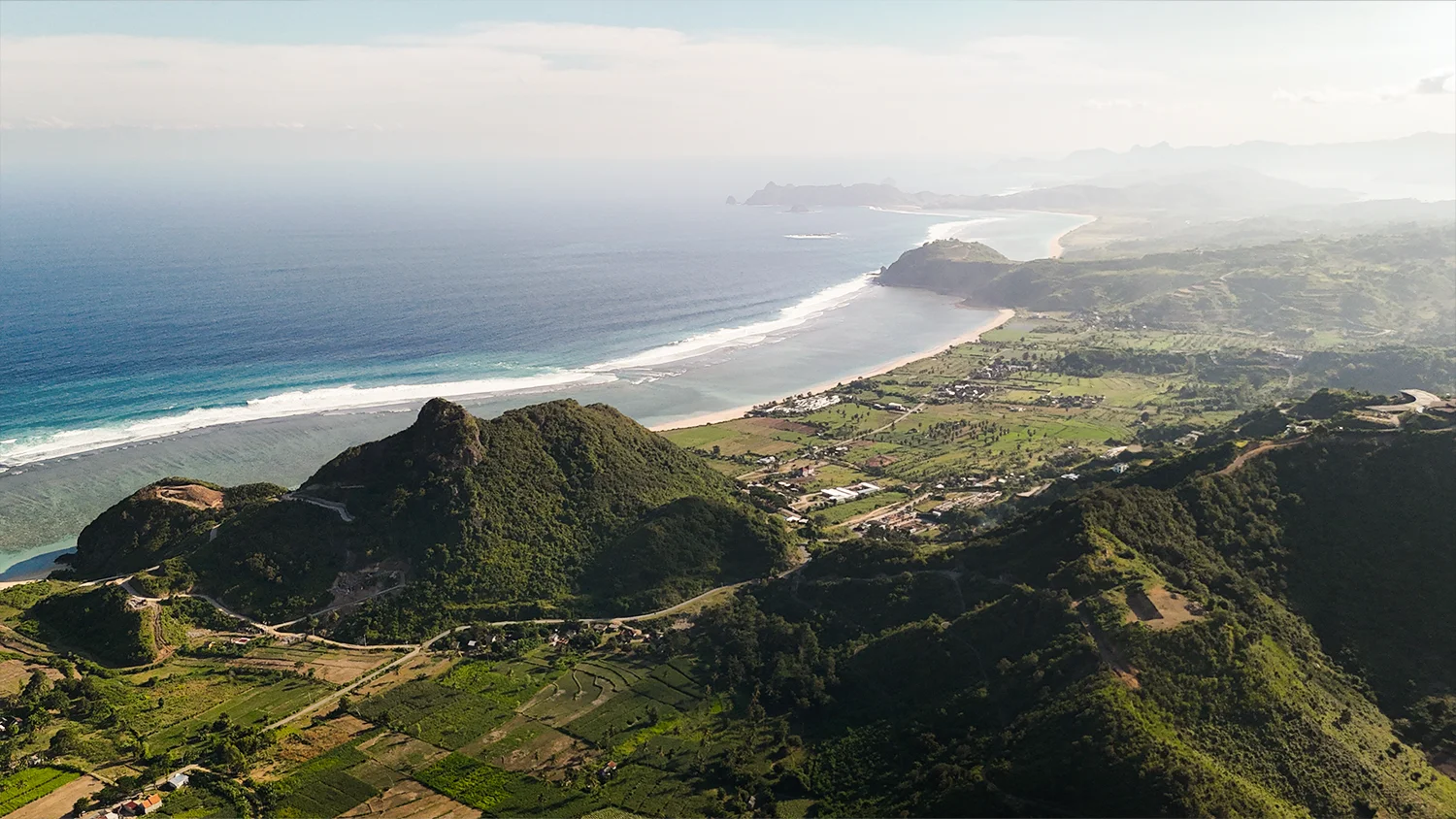
“Why invest in Indonesia?” is usually the second question a prospective buyer asks, right after “where should I buy?” It deserves a proper answer, because the case for Indonesia is not simply “it’s cheaper than Bali used to be.” It rests on a specific, checkable set of economic, demographic, and policy fundamentals and it is worth being equally clear about the risks that come with any emerging market.
The economic fundamentals
Indonesia is Southeast Asia’s largest economy, with a population exceeding 270 million and a median age well under 30. That combination: scale plus a young, urbanising population, has underpinned steady GDP growth of roughly 5% annually, a figure that has remained comparatively stable through global economic volatility that has hit other emerging markets harder. A young, growing population translates into rising domestic housing demand for decades to come, independent of the tourism story that draws most foreign buyers to Bali and Lombok specifically.
Indonesia’s real estate sector overall has been valued in the tens of billions of US dollars and is projected to keep growing at a mid-single-digit compound annual rate through the rest of the decade, driven by urbanisation, infrastructure spending, and in tourism corridors like Bali and Lombok, international demand for holiday and investment property.
Tourism is a structural growth driver, not a seasonal one
Indonesia’s tourism-facing property markets benefit from a tailwind that many competing Southeast Asian destinations do not have at the same scale: sustained, multi-year government commitment. In 2019, the Indonesian government designated five “Super Priority Destinations” for accelerated tourism infrastructure investment, including Mandalika in Lombok, alongside Bali, Borobudur, Labuan Bajo, and Lake Toba. Each has received dedicated infrastructure funding and regulatory fast-tracking from the Ministry of Tourism.
In Lombok specifically, this has translated into airport terminal expansion, new international flight routes, a multi-billion-dollar Special Economic Zone around Mandalika, and international hotel brand entries, all of which directly expand the addressable market for rental property. We cover this in detail in our companion piece on Mandalika’s infrastructure programme.
Legal reform has reduced, not eliminated, foreign ownership friction
For years, the most common objection to Indonesian property investment was ownership uncertainty. That picture has genuinely improved. Indonesia’s regulatory framework now provides multiple clearly defined pathways for foreign investment:
- Leasehold and PT PMA/HGB structures for property ownership, both well-established and enforceable in Indonesian courts.
- The Golden Visa (second home visa) programme, which offers longer-term residency to qualifying investors, reducing the friction of frequent visa runs for buyers who intend to spend significant time in the country.
- Continued refinement of Hak Pakai (Right of Use) rules for foreign residency permit holders, expanding individual ownership options for qualifying long-term residents.
None of this makes Indonesia a “freehold-for-foreigners” market, it is not, and any agent suggesting otherwise should be treated with caution. But it does mean the pathways available are more established and better understood by qualified professionals than they were even five years ago.
Where the value still exists
A useful way to think about Indonesia’s property markets in 2026 is by stage of maturity. Jakarta represents an established, large-scale urban market. Bali is a mature, internationally recognised tourism market where the best locations have already re-rated significantly, and available inventory is increasingly competitive. Lombok and South Lombok in particular, is earlier in the same tourism-driven growth cycle that transformed Bali over the past two decades, backed by the same category of government infrastructure commitment, at land and villa prices that remain well below Bali’s established zones.
This is the core of the “why Lombok, and why now” argument that sits underneath most serious Indonesian property discussions today: not that Lombok is a different story to Bali’s, but that it is an earlier chapter of a similar one.
The risks, honestly stated
Currency volatility between the Indonesian Rupiah and major currencies affects real returns and should be modelled, not ignored. Bureaucratic processes, while improving, can move more slowly than buyers from more streamlined markets expect. Infrastructure outside the main tourism corridors remains inconsistent. And as with any emerging market, execution risk — the quality of your legal advice, your developer’s track record, and your ownership structure matters more than the macro thesis itself. Investors who do well in Indonesia are the ones who take the time to understand the market, use qualified independent legal counsel, and structure their investment properly rather than moving on optimism alone.
How this applies to a South Lombok investment specifically
If the macro case for Indonesia persuades you, the next question is where within Indonesia to act on it. South Lombok, and Selong Belanak specifically, sits at the intersection of the strongest parts of this thesis: direct beneficiary of the Mandalika Special Economic Zone’s infrastructure spending, still meaningfully below Bali’s price levels, and supported by an airport and road network that has already been substantially upgraded rather than merely promised.
For the area-specific case, see Investing in Selong Belanak: The Definitive 2026 Guide and Lombok vs Bali: Why Smart Investors Are Choosing South Lombok.
Frequently Asked Questions
Q: Is Indonesia a good country to invest in property?
A: For investors with a multi-year horizon and a genuine tourism or urbanisation thesis, yes. Indonesia combines a large, young, growing population, steady GDP growth around 5% annually, sustained government infrastructure investment in key tourism corridors, and an increasingly well-understood legal framework for foreign property ownership. Returns depend heavily on location and execution, as with any market.
Q: Can foreigners legally invest in property in Indonesia?
A: Yes, through leasehold agreements or a PT PMA company holding HGB (Right to Build) title. Foreign individuals cannot hold freehold title directly, but both alternative structures are legally established, enforceable, and widely used across Bali and Lombok.
Q: Why are investors choosing Lombok over Bali right now?
A: Lombok is benefiting from the same tourism-driven growth dynamics that transformed Bali over the past two decades: rising international arrivals, a major government-backed infrastructure programme centred on the Mandalika Special Economic Zone, and international flight expansion but at an earlier stage of its cycle, which is reflected in significantly lower land and villa prices than Bali’s established zones.
Q: What is the Golden Visa in Indonesia?
A: Indonesia’s Golden Visa (second home visa) programme offers longer-term residency to qualifying investors, reducing the need for frequent visa renewals for those who intend to spend significant time in the country in connection with a property investment or business interest.
Q: What are the biggest risks of investing in Indonesian property?
A: Currency volatility between the Rupiah and major currencies, bureaucratic processes that can be slower than in more established markets, inconsistent infrastructure outside major tourism corridors, and execution risk tied to legal structuring and developer quality. These are manageable with qualified independent legal and tax advice and are not unique to Indonesia among emerging markets.
Read Our Next Article
Investing in Selong Belanak: The Definitive 2026 Guide
Mandalika & Lombok’s Infrastructure Boom: What It Means for Property Investors

Villas for Sale in Lombok: Areas, Prices & What to Know Before You Buy

Curating exceptional ownership opportunities across South Lombok, from turnkey villas to premium ocean-view land investments.


